

Thinking about launching your own casino? Let's get one thing straight: this isn't some casual side quest. The initial investment is serious. A physical, land-based casino is a massive financial commitment, often running upwards of ₹75 Crore just to get started. An online casino, while cheaper to set up, requires a constant stream of cash for tech and marketing to even get noticed in a massively overcrowded server.
Land-Based vs Online Casino: The Initial Costs
Before you even think about dealing first hand, you need to wrap your head around the scale of the investment. It’s not just about having enough gold for the initial setup; it’s about having deep enough pockets to keep the operation running smoothly long after you launch. Whether you choose a grand brick-and-mortar establishment or a sleek online platform will completely change your financial roadmap from day one.
Opening a physical casino in a regulated Indian state like Goa or Sikkim is a high-stakes play. The upfront costs are staggering, covering everything from prime real estate to securing one of the few, and incredibly expensive, commercial licences available. On the other hand, an online casino offers a more accessible path, but don’t mistake "accessible" for "cheap." The real PvP battle online is won with big marketing budgets and cutting-edge technology.
A Tale of Two Ventures
To put it into perspective, starting a casino in India is a major financial undertaking, with the final bill heavily influenced by licensing, location, and technology. For land-based casinos, just getting the commercial licence in states like Goa can be a multi-crore affair. In fact, it's not uncommon for the total initial cost to fly past ₹75 Crore once you add in the land, building, and everything else needed to open your doors. You can find more details on the Indian casino market over at Future Market Insights.
This huge difference in capital shapes your entire business plan. A land-based casino is a long-term build, like grinding levels in a hardcore RPG. An online casino is more like a fast-paced MOBA where agility, constant updates, and outspending your competition are the keys to victory.
The choice isn't just about money; it's about what kind of business you want to run. A land-based casino is a marathon of property management and hospitality. An online casino is a sprint of digital marketing and tech innovation.
To give you a clearer picture of the initial financial demands, let’s look at a direct comparison.
Land-Based vs Online Casino Startup Cost Snapshot
Here’s a quick table to break down where the money goes when you’re just getting started. As you'll see, the initial numbers are worlds apart.
|
Cost Category |
Land-Based Casino (Estimated Range) |
Online Casino (Estimated Range) |
|
Initial Investment |
Extremely High (₹75 Cr - ₹750 Cr+) |
High (₹4 Cr - ₹15 Cr+) |
|
Licensing Costs |
Very High (₹7.5 Cr+ annually) |
Moderate (₹40 Lakh - ₹1.5 Cr annually) |
|
Operational Costs |
Massive (Staff, Utilities, Security) |
High (Marketing, Tech, Support) |
The takeaway is clear: while an online casino requires a significant budget, it's a fraction of what's needed for a physical location. Your choice will depend entirely on your access to capital and your long-term business strategy.
Building Your Real-World Gaming Empire
So, you’re thinking of going to the big league, skipping the digital world for a real-world gaming palace. Building a physical, brick-and-mortar casino isn't just a business venture; it's like building a final-level dungeon from the ground up. The potential rewards are massive, but the initial investment and effort required are monumental.
Unlike an online setup, a land-based casino demands a huge upfront investment in physical assets. The very first challenge is securing prime real estate in a location that attracts high rollers, followed by constructing a venue that dazzles from the moment players walk through the door. We're talking opulent gaming floors, luxury hotel wings, and restaurants that could earn a Michelin star.
The Licensing Boss Fight
Before you even think about laying the first brick, you have to face the ultimate gatekeeper: the gaming licence. In India, this is only possible in a few select zones, primarily Goa and Sikkim. Securing a commercial licence here is a multi-crore hurdle that can easily cost upwards of ₹7.5 Crore annually just for the fee, and that’s not counting the long and expensive application process itself.
This licence is your key to the kingdom, proving your operation is legitimate, secure, and ready to handle high-stakes action. Without it, your dream empire is dead in the water. This initial step alone separates the casual dreamers from the serious players with the capital to compete.
Gearing Up Your Gaming Floor
Once the legal paperwork is sorted, it’s time to equip your casino. This is where a massive chunk of your budget will go. Every single piece of equipment, from the slots to the surveillance systems, comes with a hefty price tag.
Here’s a look at the essential gear you’ll need:
- Slot Machines: These are the bread and butter of any casino floor. Each machine costs anywhere from ₹8 Lakh to ₹20 Lakh. A decent-sized casino needs hundreds, if not thousands, of them to feel complete.
- Poker and Blackjack Tables: These aren't just tables; they're custom-built pieces designed for intense play. A professional-grade table can set you back ₹4 Lakh to ₹8 Lakh each.
- Roulette Wheels: A high-quality roulette wheel is a work of precision engineering to ensure fairness, and they don't come cheap, often costing ₹4 Lakh or more.
- Surveillance Gear: A top-tier security system is non-negotiable. With high-definition cameras, monitoring stations, and security software, this system can easily cost over ₹1 Crore to install.
This infographic shows a simplified comparison of the major costs for land-based versus online casinos.

As the visual data shows, while both paths are expensive, the sheer scale of physical infrastructure—land, construction, and equipment—makes the land-based option a vastly more capital-intensive undertaking.
Assembling Your Team of Staff
Your empire is nothing without its people. A land-based casino is a massive operation that needs a large, skilled team running it 24/7. This ongoing operational cost is one of the biggest financial commitments you'll face.
"A casino is a living, breathing city that never sleeps. Your staff are its citizens, its guardians, and its guides. Underinvesting in them is like building a castle with no one to defend it."
You'll need to recruit and pay a small army of professionals, each with a specific role. This includes highly trained dealers, vigilant security guards, hospitality experts for the hotel and restaurants, maintenance crews to keep the machines running, and a full management team to oversee the entire operation. The monthly payroll for even a mid-sized casino can easily run into crores of rupees, making it a relentless financial drain long after the grand opening. This is a critical factor when calculating how much it costs to start a casino for the long term.
Launching Your Online E-Casino Server
So, you'd rather jump into the fast-paced digital arena than build a physical casino? Launching an online casino certainly has a lower barrier to entry, but don't be fooled. It’s a fiercely competitive space where only the well-funded survive. You’re essentially trading the massive cost of construction for the relentless grind of digital marketing and tech upkeep.
Going digital means you're not shackled by Indian state laws in the same way a land-based operation is. Instead, your primary mission is to secure an international gaming licence from a respected jurisdiction. Think of places like Malta, Curaçao, or the Isle of Man. Each one has its own rules, costs, and reputation.

The Tech Stack: Your Biggest Investment
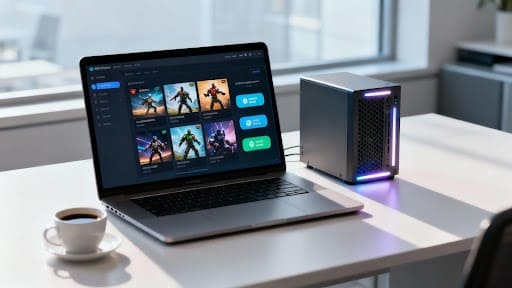
Your single biggest line item will be the casino platform itself. This is the core engine of your entire operation—a robust, secure, and feature-rich software solution with an integrated payment gateway. If you get this wrong, your whole venture will lag, crash, or worse, get hacked.
You have two main paths to go down here, each with its own trade-offs:
- Turnkey Solutions: This is like getting a pre-built gaming PC. You get a platform that's good to go, complete with games, payment systems, and support already integrated. It's much faster and cheaper upfront, but you'll have less room for customisation and will have to share a percentage of your revenue.
- Custom Build (White Label): This is the bespoke route, like building your own rig from scratch. You get full control over the design, features, and the entire player experience. It’s significantly more expensive and takes a lot longer, but it gives you a unique platform that can truly stand out from the crowd.
A turnkey solution gets you into the game quickly, but a custom build lets you write the rules. Your choice really boils down to whether you value speed and convenience over long-term brand identity and control.
Building Your Game Library
Once your platform is sorted, you need to fill it with games. You don't build these yourself; you license them from top-tier developers. Think of it as stocking your shelves with the best loot to keep players coming back. This is a recurring cost, usually based on a revenue-sharing model with the game providers.
The more popular the developer, the higher the fee. You'll need a diverse library covering everything from classic slots and table games to immersive live dealer experiences. To even be competitive, you need content from the industry's biggest names. Check out our guide on top casino game providers to understand which developers are essential for a successful launch. It will give you a clear idea of who creates the games players are actively looking for.
The Never-Ending Marketing Grind
Here’s a dose of reality: launching is the easy part. The real battle is acquiring players. You need a massive and continuous marketing budget just to cut through the noise. This isn't a one-time expense; it’s a constant cash burn for SEO, pay-per-click ads, affiliate marketing, and bonuses to attract new players.
Your operational costs are also a major factor. You'll need to budget for 24/7 customer support, server maintenance to prevent costly downtime, and a team to make sure you stay compliant with your licensing regulations. These ongoing costs are what determine whether your online casino can survive past its first year.
Startup costs for an online gambling business targeting India can be steep. You're typically looking at an initial outlay of $100,000 to $500,000, depending on your scale and where you get your licence. Beyond that, monthly operational expenses can range from $30,000 to $100,000, covering everything from server hosting to aggressive marketing campaigns that often exceed $50,000 a month on their own.
Navigating the Legal Maze and Licensing Fees
When you're trying to figure out how much it costs to start a casino, the first and biggest hurdle is always the legal side of things. Think of the legal framework as the game's rulebook – if you don't follow them, you're banned before the first hand is even dealt. Legal compliance and licensing aren't just line items on a budget; they are the absolute foundation of your business.
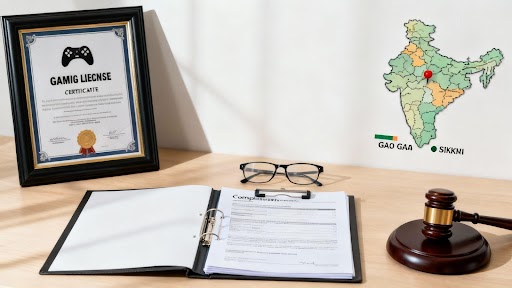
For anyone dreaming of a brick-and-mortar casino, the map is incredibly small. Indian law only permits physical casinos in a handful of states, with Goa and Sikkim being the most well-known. This scarcity drives up the value – and the price – of a licence, making it a seriously expensive affair.
The Land-Based Licensing Grind
Trying to get a licence in a state like Goa is a massive undertaking. The fees alone are steep, often running into several crores every year. It’s not a one-time payment; it's a recurring cost you have to meet just to keep the doors open.
The application process itself is notoriously complex. You’re looking at mountains of paperwork, intense background checks, and the need to prove you have deep pockets to run a secure and trustworthy operation. This initial phase requires a significant investment in legal experts who know the system inside and out, adding yet another layer of cost.
Securing a land-based casino licence in India isn't just about paying a fee. It's about demonstrating immense financial stability and passing a rigorous vetting process designed to keep amateurs out of the big leagues.
The Offshore Strategy for Online Casinos
For online casinos, the legal situation is a bit more of a grey area, with rules that can feel like they're constantly changing. Given the legal uncertainty surrounding online gambling within India, most operators take a different route: setting up offshore. This involves getting a gaming licence from a foreign jurisdiction that's known for regulating online casinos.
It's a strategic move that allows them to operate legally on an international level while still welcoming players from India. Some of the most popular licensing hubs include:
- Curaçao: Often the starting point for new operators. It's quicker and more affordable to get, though it doesn't carry the same weight as other licences.
- Malta (MGA): Widely considered the gold standard. A licence from the Malta Gaming Authority is tough to get and expensive, but it signals a high level of credibility and trust to players.
- Isle of Man: Another top-tier option, respected for its strong player protection policies and solid regulatory framework.
The costs for these licences can vary dramatically. A Curaçao licence might start in the ₹15-20 Lakhs range, whereas a premium MGA licence could easily cost you more than ₹75 Lakhs in initial and ongoing annual fees. To get a better handle on these complexities, it's worth reading The Evolving Legal Framework of Online Gambling in India, which breaks down these legal details.
No matter which path you take, budgeting for legal and licensing fees is non-negotiable. These aren't just startup expenses; they are continuous operational costs. You'll need ongoing legal advice to stay on top of complicated tax laws and shifting regulations to ensure your entire operation stays legitimate. Trying to cut corners here is the quickest way to sink your business before it even has a chance to float.
Managing Ongoing Operational Costs and ROI
Getting your casino off the ground is one thing, but keeping it profitable day in and day out is the real endgame. The initial setup cost might feel like a huge hurdle, but it's the ongoing operational expenses (OPEX) that can slowly drain your resources if you’re not prepared. This is where many operators trip up, completely underestimating the financial endurance required to keep the lights on and the games running.
For land-based casinos, OPEX is a different kind of beast altogether. You’re looking at massive payrolls to cover dealers, security teams, and hospitality staff—it’s like managing a huge guild. On top of that, imagine the utility bills for powering thousands of slot machines and keeping a sprawling venue lit around the clock. Factor in regular machine maintenance, hefty security contracts, and property taxes, and the monthly burn rate becomes staggering.
The Online Casino Grind: CAC vs. LTV
In the digital world, the fight isn’t for physical space but for screen time and player loyalty. The game here revolves around two crucial metrics: Customer Acquisition Cost (CAC) and Player Lifetime Value (LTV). Simply put, CAC is what you spend to get a new player to sign up and make a deposit. LTV is the total profit you expect to earn from that player for as long as they play with you.
The formula for success is straightforward: your LTV must be much higher than your CAC. This puts you in a perpetual, costly battle for players' attention. You'll find yourself pouring money into:
- Aggressive Marketing Campaigns: Constant spending on Google Ads, social media marketing, and SEO just to stay visible in a crowded market.
- Affiliate Programmes: Paying commissions to streamers, bloggers, and websites that refer new players to your platform.
- Bonuses and Promotions: Handing out free spins and deposit matches to attract new users and stop existing ones from wandering off to a competitor.
- Tech Upkeep: Covering recurring costs for server hosting, software updates, and the licensing fees for your game library.
This nonstop spending is exactly why having a healthy financial runway is so critical. You need enough cash to cover a high burn rate for at least six months—ideally longer—before you can realistically expect to see any positive returns.
Calculating Your Return on Investment
So, when does the money actually start flowing in? That’s the golden question, and the answer lies in your Return on Investment (ROI). This isn't a get-rich-quick scheme; the casino industry, both online and offline, is a long-term game. Just breaking even can take years, let alone turning a healthy profit.
For online casinos, a realistic timeline to reach profitability is often between 18 to 36 months. The first year is almost always a period of intense cash burn, where the focus is squarely on acquiring a solid player base and building brand trust. A huge part of earning that trust is ensuring operations run smoothly, especially when it comes to withdrawals. Offering a reliable and fast payout can be a game-changer for player retention and building a stellar reputation.
Think of your first year's budget as your starting health bar. If you don't have enough HP (capital) to withstand the initial damage (costs), you'll be wiped out before you even reach the first checkpoint. A financial runway for at least six months of heavy losses is the bare minimum.
To give you a better sense of this monthly grind, let’s break down what you can expect to spend.
Typical Monthly Operational Expenses Breakdown
This table gives a snapshot of the recurring costs that will shape your budget long after the grand opening fanfare has faded.
|
Expense Category |
Online Casino (Monthly Estimate) |
Land-Based Casino (Monthly Estimate) |
|
Marketing & Promotions |
₹40 Lakh - ₹1.5 Cr+ |
₹75 Lakh - ₹4 Cr+ |
|
Staff Salaries |
₹25 Lakh - ₹75 Lakh+ |
₹2 Cr - ₹10 Cr+ |
|
Licensing & Compliance |
₹4 Lakh - ₹15 Lakh |
₹60 Lakh - ₹1.5 Cr+ |
|
Tech & Maintenance |
₹8 Lakh - ₹40 Lakh |
₹40 Lakh - ₹2 Cr+ |
|
Utilities & Rent |
Minimal (for office) |
₹1 Cr - ₹5 Cr+ |
As these numbers show, answering "how much does it cost to start a casino" means looking far beyond the initial setup. The true test is managing these relentless operational costs month after month while patiently playing the long game for your investment to pay off.